Description
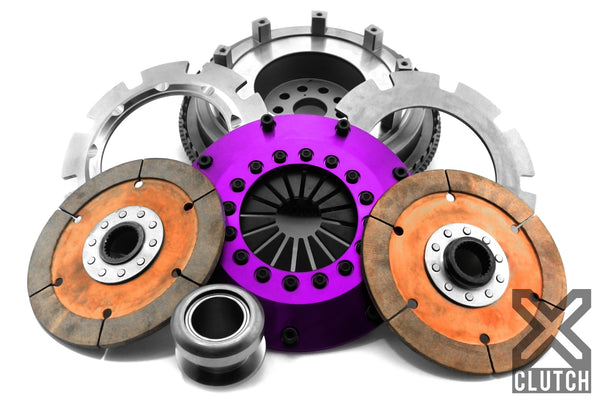
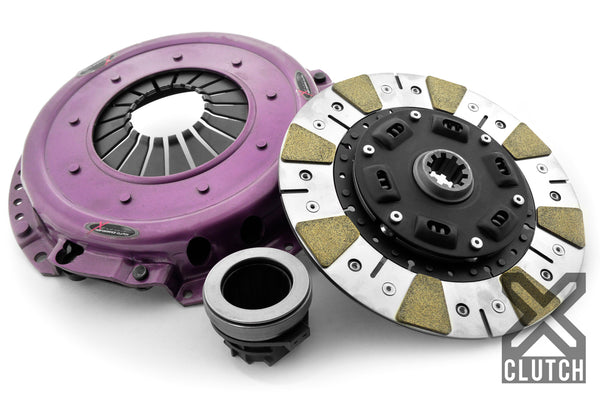
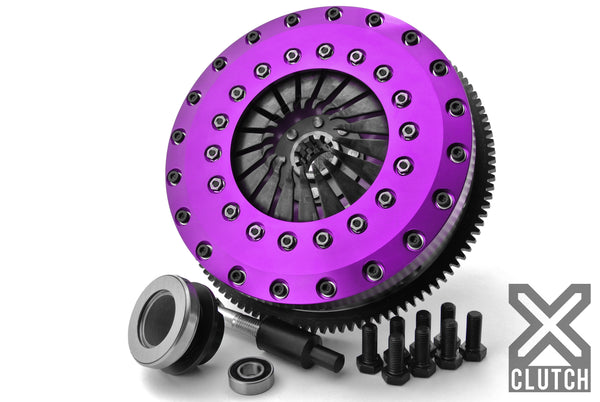
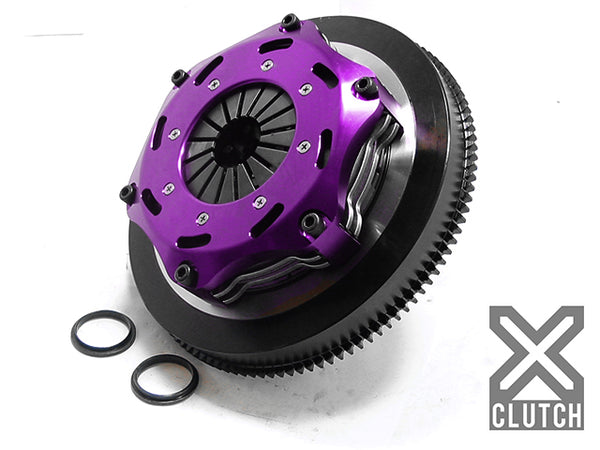
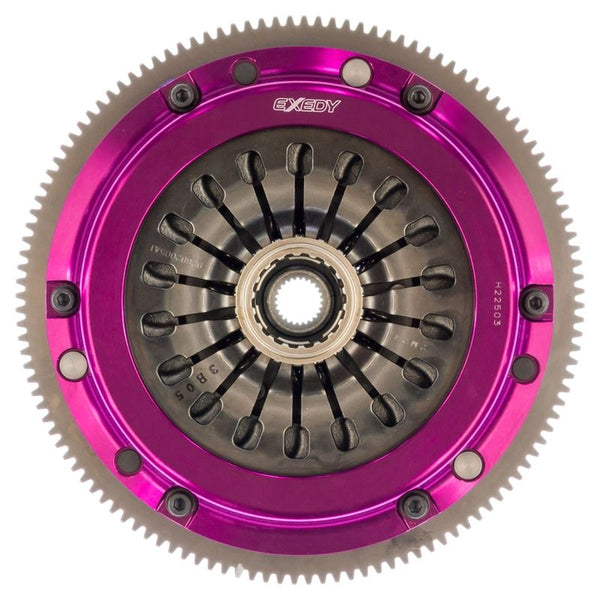
The EXEDY Hyper Single Series clutch is engineered to optimize the performance of cars that are moderately modified, but do not require the clutch capacity of a multi-plate clutch. Similar to our multi-plate clutches, it has a purple anodized, forged aluminum cover. The aluminum cover is stiffer than a stamped cover and therefore allows a higher lever ratio to maintain the pedal efforts at a reasonable level. There is no clamp load deflection as found in a pressed metal type cover. Additionally, the pressure plate features a series of turbine-like, air flow enhancing vanes that keep the clutch cooler under extreme operating conditions to improve wear life.
Notes:
- All referenced torque ratings are measured at the wheels
- SFI 1.1 Approved – Certified for use in Competitive Motorsports
Features:
- Average of 40% increase in clamp load over stock
- Extra capacity handles street/race car power upgrades
- Forged assembly is far stiffer than stamped-type
- Incredible strength means no clamp-load deflection
- Integrated turbine-like fins enhance airflow, keeping clutch assembly cooler and extending component life
- Forged Chromoly Flywheel
- Combination of low weight and high heat capacity
- Designed for Rally, Drag and hi-performance Street
- SFI approved for racing
- EXEDY exclusive friction composition
- High friction-coefficient material
- Designed for low wear and high heat resistance
- Reduced diameter damping disc for reduced inertia
- Patent Pending disc system
- Race or extreme street applications
Includes:
- Clutch Cover Assembly
- CD Assembly
- Flywheel
- Cover Bolt SE
- Flywheel Bolt
EXEDY’s forged aluminum pressure plate delivers a higher clamp load than the stock clutch without a significantly higher pedal effort, because the stiffer forged cover allows all of the pedal travel to be utilized to disengage the disc. A stamped steel plate is spongier, taking up some of the pedal travel as it flexes. The stiffer forged cover allows the use of a stiffer diaphragm spring, pivoted differently inside the cover for more mechanical advantage. The increased mechanical advantage lowers pedal pressure, while the lack of lost motion permits normal pedal travel. The bottom line: more torque-holding capacity and great feel at part-engagement. An additional feature of the pressure plate is a series of turbine-like, airflow-enhancing vanes that keep the clutch cooler under extreme operating conditions, which improves durability.
The heaviest components of the clutch system are the clutch cover, plates and flywheel. Low inertia discs allow the transmission to synchronize in a shorter interval of time, eliminating time loss during shift changing while also reducing stress on drivetrain components. The weight of a carbon clutch disc is one third that of a metallic disc.
For most streetable applications, the preferred clutch disc is the cerametallic style with a damper hub. This style of disc will have a consistent feel throughout the day, from the first cold start of the day to a launch from the Christmas Tree after a heat-inducing burnout. The damper hub will help with a smooth launch and improved gearchange feel, as well as eliminate gear rattle moderate speeds. Gear rattle is caused by variations in crankshaft rotational speed, as individual cylinders fire. That in turn makes the gear teeth bounce and rattle against each other as you head on down the road.
A more ambitiously-modified vehicle, used mostly for drag racing, autocrossing or rallying might benefit from the use of a Carbon-D friction disc, Faced with pure carbon-fiber, laid one strand at a time and baked at 3600° to cure, carbon fiber has an interesting characteristic: it’s coefficient of friction (COF) gets higher as it gets hotter. Unfortunately, it’s inconveniently low when at room temperatures, rising to the same COF range as cerametallic friction material when warmed properly. Used in a street vehicle, its inconsistent takeup may be annoying in a daily driver. Carbon fiber is very long-lived in heavy-duty use, however. Carbon-D friction discs have a spring-dampener hub for easy shifting and quiet gears. Carbon-D is equipped with a new dual stage damper, a low-load stage and rapid-acceleration stage, both of which are individually tuned for each car type.
For a dedicated race or track car, Carbon-R friction is preferred. The lack of a dampener hub may mean a fair amount of harshness, vibration and noise may intrude into the cabin or be felt in the gearshift or clutch pedal. The undampened hub, combined with the lighter weight of the whole assembly may make starting up difficult to do without some initial judder. The advantages in shifting speed and torque capacity are the payoff for this lack of refinement.
Due to the inherent properties of the carbon material, EXEDY suggests the proper way to bring the discs up to operating temperature. The correct method is three sequential five second “slips” of the clutch within 30 seconds at low RPM. This will heat the discs so they will hold the specified torque rating.